


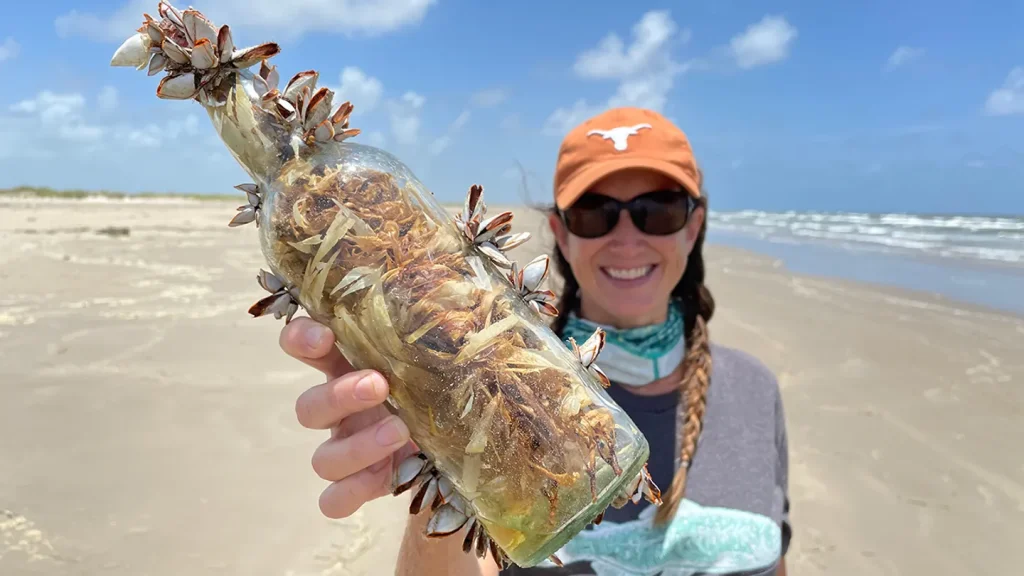
Have you ever come across an unusual bottle while walking along a beach—one that appears sealed and contains materials like plants or hair? While rare, such discoveries have been reported along coastlines in various parts of the world, including Texas.
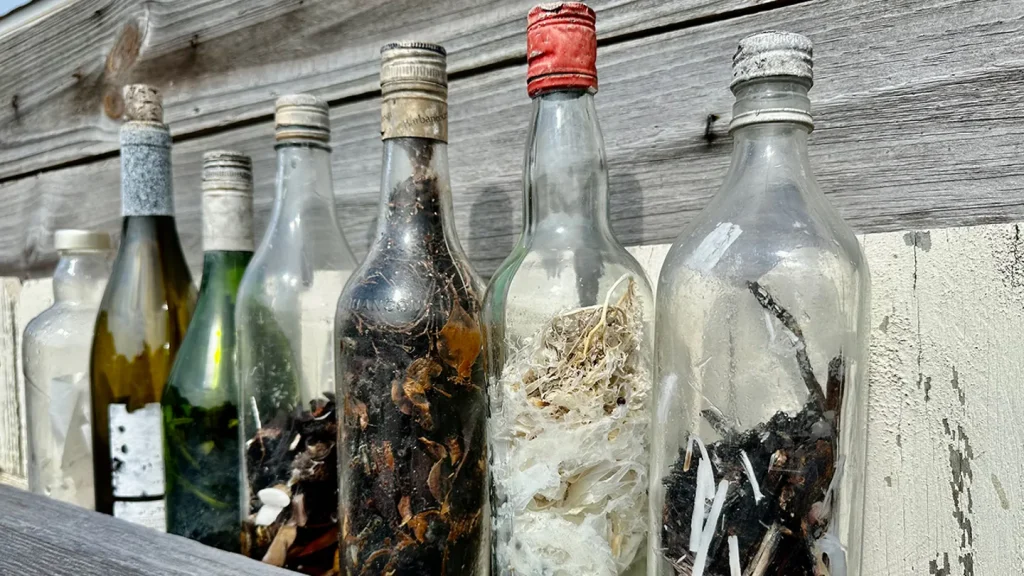
Researchers from the Harte Research Institute for Gulf of Mexico Studies at Texas A&M University–Corpus Christi have documented finding objects commonly referred to as “witch bottles” along Gulf Coast beaches. These bottles are not modern items and are best understood as historical artifacts connected to early European folk traditions.

A Brief Historical Background
The term witch bottle dates back to 17th-century Europe. Despite the name, these bottles were not associated with practicing witchcraft. Instead, historical records suggest they were used as part of folk belief systems during a time when unexplained illnesses or misfortune were often attributed to supernatural causes.
According to historical research published by academic sources such as JSTOR Daily and the journal Magic, Ritual, and Witchcraft, people believed these bottles could symbolically represent protection or relief from perceived misfortune. The contents varied and often included everyday materials such as hair, plant matter, or small household items.
How Were They Used?
Historical accounts indicate that such bottles were sometimes buried near homes or placed in fireplaces or walls. At the time, these actions were viewed as protective rituals, not acts intended to harm others. Modern scholars classify these practices as part of early cultural coping mechanisms, rather than evidence of harmful or dangerous behavior.
Today, researchers study these bottles to better understand social history, belief systems, and daily life in earlier centuries.
Why Do They Appear on Texas Beaches?
Experts believe the bottles found along the Texas coastline likely originated elsewhere and traveled via ocean currents. Some researchers suggest they may have come from regions such as the Caribbean or parts of South America, where similar artifacts have been historically documented.
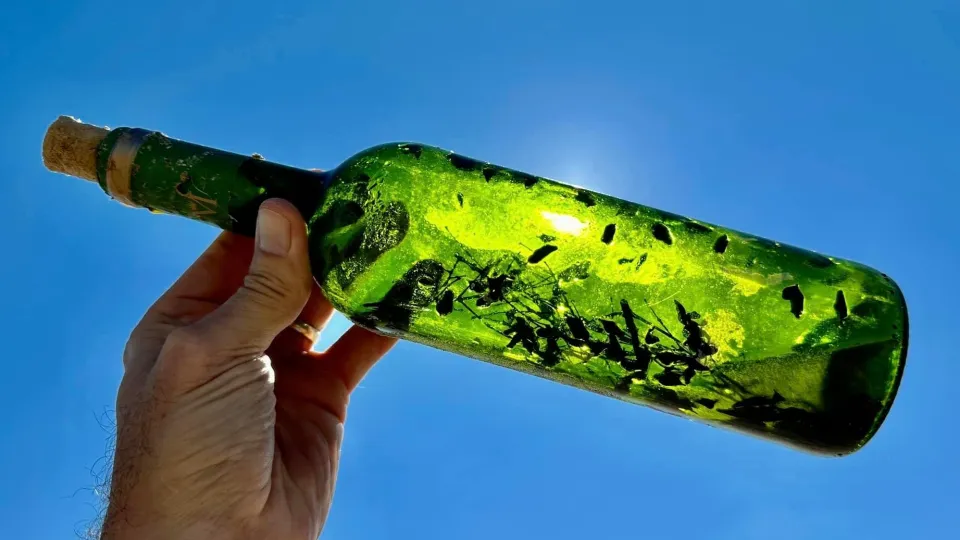
Jace Tunnell, Director of Community Engagement at the Harte Research Institute, has reported discovering several such bottles over the years during beach surveys. Importantly, these finds are treated as archaeological curiosities, not functional objects.
A Historical Artifact, Not a Superstition
While the name may sound mysterious, “witch bottles” are best understood as historical remnants of past cultures. They do not pose any danger and have no scientific or medical function. Today, they are valuable to historians and archaeologists studying how earlier societies interpreted the world around them.
If you ever encounter an unusual sealed object on a beach, experts recommend not opening it and reporting it to local environmental or research organizations so it can be properly examined.
WHAT DID THESE BOTTLES CONTAIN?
The contents of witch bottles varied depending on region and time period. Common materials found in historical examples include:
- Hair or plant matter
- Small metal objects such as pins or nails
- Household materials that were easily accessible
There is no scientific or medical purpose associated with these contents. Today, researchers analyze them solely for cultural and historical insight.
HOW WERE WITCH BOTTLES USED IN THE PAST?
Historical records suggest these bottles were often buried near homes, placed under hearths, or hidden inside walls. These locations were symbolically significant in early belief systems.
Anthropologists explain that these practices were not intended to harm anyone. Instead, they reflect early coping mechanisms used by societies dealing with uncertainty, illness, or fear without access to modern science or medicine.
WHY DO WITCH BOTTLES APPEAR ON TEXAS BEACHES?
Experts believe that many witch bottles found along the Texas coastline did not originate locally. Instead, they may have traveled through ocean currents over long periods of time.
Some researchers suggest the bottles could have originated from regions such as the Caribbean or parts of South America, where similar historical artifacts have been documented. Storms, erosion, and shifting tides can eventually uncover or transport these items to new locations.
MODERN ARCHAEOLOGICAL SIGNIFICANCE
Today, witch bottles are treated as archaeological and historical objects. When discovered, researchers typically document their condition and location rather than opening them.
Studying these artifacts helps historians better understand:
- Early belief systems
- Cultural exchange across regions
- How people historically responded to uncertainty
They offer valuable insight into everyday life centuries ago.
NO SUPERSTITION, NO DANGER
Despite their mysterious name, witch bottles pose no known risk and have no supernatural or scientific function. Experts advise that if someone encounters a sealed or unusual object on a beach, it should not be opened and should instead be reported to local environmental or research authorities.
A GLIMPSE INTO HUMAN HISTORY
Witch bottles serve as reminders of how human understanding has evolved over time. Rather than symbols of superstition, they are best viewed as historical remnants that show how earlier societies tried to protect themselves and make sense of the world around them.
Today, these artifacts help researchers tell stories of the past—connecting modern society with centuries-old traditions and beliefs.